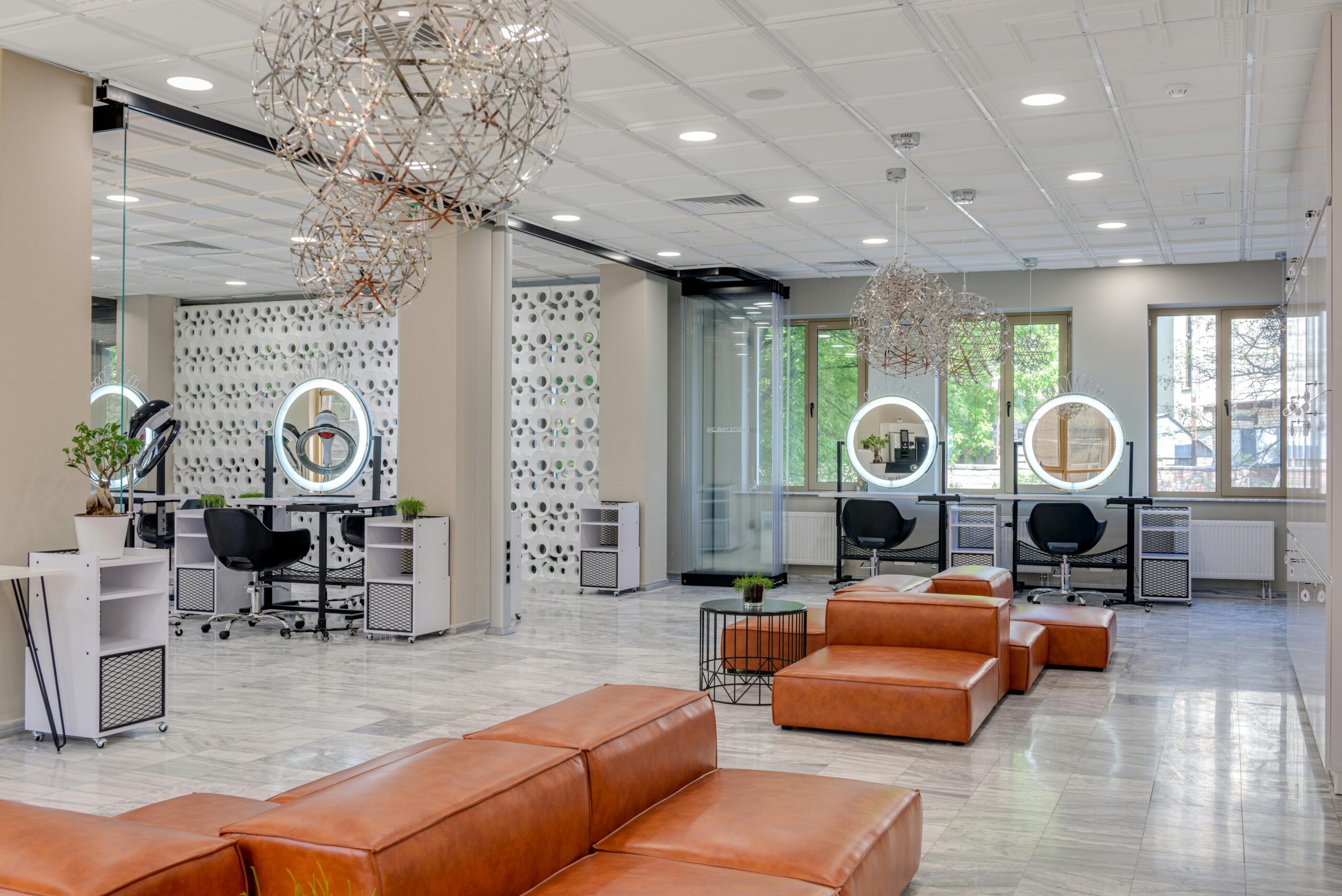
How to Start a hair salon?
It requires blending beauty passion, business savvy and market insight. It demands clear planning from concept to opening day. The UK hairdressing industry supports over 36,000 salons and generates billions in revenue each year (HABIA, 2021; IBISWorld, 2025). However, success hinges on addressing competition, regulations and consumer trends.
Why Start a Hair Salon Now
The UK hair and beauty sector grows steadily despite challenges.
Consumers spend around £2 billion quarterly on hair and grooming services (PolicyBee, 2025).
Young professionals, families, and wellness seekers drive demand for personalised treatments (MK College, 2024). Moreover, the rise of barbershops and mobile services creates opportunities for specialised niches.
However, traditional salons face headwinds. Numbers have declined slightly due to self‑employment and freelance stylists (NHBF, 2025).
Therefore, new salons must differentiate through experience, sustainability, or community focus. Entrepreneurs who plan well can thrive in this competitive landscape (Yeadon‑Lee, 2005; Davis, 2023).
Define to Start a Salon Concept and Niche
Begin by choosing a clear concept. Decide if you focus on hair only, full beauty services, or specialised treatments like extensions or balayage (ICAEW, 2025).
Popular niches include eco‑friendly salons, men’s grooming, curly hair specialists or express services for busy professionals.
Next, research your target market closely. Urban areas like London, Oxford and Milton Keynes show high demand (MK College, 2024).
Consider demographics, income levels and local competition. For instance, family‑friendly suburbs suit kids’ cuts and blow‑drys, while city centres favour trendy colour and styling (PolicyBee, 2025). A strong concept guides every decision from location to marketing.

Location and Premises Planning
Consider, before you start a hair salon, location drives foot traffic and visibility. High streets, shopping centers, and residential areas with good parking work best (Broxtowe Borough Council, n.d.). Check footfall data, nearby competitors and transport links. Rent costs vary widely, so budget carefully for London versus smaller towns.
Premises must meet strict health and safety standards. Ensure adequate space for chairs, sinks, waiting areas and storage (Broxtowe Borough Council, n.d.).
Ventilation, lighting and sanitation systems are non‑negotiable. Local authorities inspect before licensing. Therefore, hire a surveyor early to avoid costly retrofits (ICAEW, 2025).
Legal Requirements and Licensing
UK regulations protect public health and consumer rights. Register your salon with the local authority at least 28 days before opening. They inspect for hygiene, equipment and waste disposal (Broxtowe Borough Council, n.d.; gov.uk, 2025).
Individual stylists need qualifications for registration with the Hairdressing Council, though this is voluntary in most areas (Broxtowe Borough Council, n.d.).
Some councils require MST licences for beauty treatments. Fees range from £100 to £2,500 depending on location (Broxtowe Borough Council, n.d.).
Comply with GDPR for client data and insurance for public liability.
Financial Planning and Startup Costs
Startup costs range from £20,000 to £100,000 or more. Key expenses include premises (£10,000–£40,000 setup), equipment (£5,000–£20,000), stock (£2,000–£5,000) and marketing (£1,000–£5,000) (SWLEP, n.d.). Ongoing costs cover rent, utilities, products and staff wages.
Create a detailed budget and cash flow forecast. Many salons break even in 6–12 months with 50% capacity (Davis, 2023). Secure funding through personal savings, bank loans or small business grants. Track metrics like average ticket value (£40–£60) and chair utilisation (NHBF, 2025).
Sourcing Equipment and Supplies
Invest in quality equipment that lasts. Essentials include salon chairs, wash stations, styling units, dryers and mirrors. Budget £200–£500 per chair and £1,000+ for a good backwash unit (SWLEP, n.d.).
Choose reliable suppliers for products like shampoos, colours and tools. Negotiate trade accounts for discounts. Sustainability matters now; opt for eco‑friendly lines to attract conscious clients (MK College, 2024). Stock based on your services and test small quantities first.
Hiring and Training Your Team
Staff quality defines your salon. Hire stylists with NVQ Level 2 or 3 qualifications, plus relevant experience (Broxtowe Borough Council, n.d.). Barbers and colour specialists need advanced skills. Start with 2–4 chairs and grow as demand builds.
Offer competitive wages (£10–£20/hour) and commission (30–50% of services). Provide ongoing training in trends, customer service and hygiene. Apprenticeships build loyalty and meet regulatory needs (Yeadon‑Lee, 2005).
Foster a positive culture to reduce turnover, a common industry challenge (NHBF, 2025).
Marketing and Building Your Client Base
Marketing drives bookings from day one. Claim your Google Business Profile and encourage reviews. Use Instagram and TikTok for before/after videos, tutorials and stylist spotlights (PolicyBee, 2025).
Launch with an open day, discounts and loyalty cards. Partner with local businesses like gyms or beauty salons for cross‑referrals. Email newsletters keep clients returning. Budget 5–10% of revenue for ads on Facebook and Google targeting local searches (MK College, 2024).
Pricing Strategy and Services Menu
Pricing balances affordability and profitability. Research local rates: basic cuts £20–£40, colours £50–£100 (NHBF, 2025).
Offer tiered services: express, standard and premium. Introduce packages like “colour and cut” for higher spend.
Test “pricing with purpose” to boost perceived value (Lancaster University, 2024).
Communicate what makes your salon unique, such as eco‑products or skilled stylists. Adjust based on demand and feedback.
Daily Operations and Customer Experience
Smooth operations create raving fans. Use booking software like Fresha or Timely for appointments and payments. Set clear policies for cancellations, deposits and no‑shows.
Prioritise hygiene: sterilise tools, clean stations hourly and follow COSHH regulations (Broxtowe Borough Council, n.d.). Train staff in upselling and client retention. Gather feedback after every visit.
Sustainability and Community Engagement
Sustainability attracts modern clients. Use refillable products, energy‑efficient equipment and zero‑waste policies (MK College, 2024). Host workshops on haircare or upcycling.
Engage your community through events, sponsorships and charity cuts. This builds loyalty and differentiates you from chains.
Scaling and Long‑Term Success
Once established, consider expansion. Add services, open a second location or franchise. Monitor KPIs like revenue per chair (£200–£400/week) and client retention (60–80%) (Davis, 2023).
Stay adaptable to trends like male grooming and wellness treatments. Continuous learning keeps you relevant (Yeadon‑Lee, 2005).
Reference list (Harvard style)
Broxtowe Borough Council (n.d.) Hairdressing premises registration. Available at: https://www.broxtowe.gov.uk (Accessed: 18 January 2026).[static.swlep.co]
Davis, Y. (2023) Small beauty salon business strategies for sustaining profitability. Walden University.[scholarworks.waldenu]
gov.uk (2025) Register a hairdressing business. Available at: https://www.gov.uk/register-a-hairdressing-business (Accessed: 18 January 2026).[static.swlep.co]
HABIA (2021) Hair and beauty industry statistics.[eprints.hud.ac]
ICAEW (2025) Hairdressing and beauty treatment in the UK: industry profile. Available at: https://www.icaew.com/library/industry-profiles/hairdressing-and-beauty-treatment (Accessed: 18 January 2026).[icaew]
IBISWorld (2025) Hairdressing & beauty treatment in the UK industry analysis. Available at: https://www.ibisworld.com/united-kingdom/industry/hairdressing-beauty-treatment/4900/ (Accessed: 18 January 2026).[ibisworld]
Lancaster University (2024) How ‘pricing with purpose’ boosted growth at hair salon startup. Available at: https://www.lancaster.ac.uk/lums/business/business-insights/how-pricing-with-purpose-boosted-growth-at-hair-salon-startup (Accessed: 18 January 2026).[lancaster.ac]
MK College (2024) Hair & beauty summary report. Available at: https://mkcollege.ac.uk/wp-content/uploads/2024/07/MKCG-Hair-Beauty-Sector-Summary-Report.pdf (Accessed: 18 January 2026).[mkcollege.ac]
NHBF (2025) State of the industry survey.[icaew]
PolicyBee (2025) UK hair and beauty industry statistics 2025. Available at: https://www.policybee.co.uk/blog/uk-hair-and-beauty-industry-statistics (Accessed: 18 January 2026).[policybee.co]
SWLEP (n.d.) BOP032: Hairdressing salon. Available at: https://static.swlep.co.uk/swlep/docs/librariesprovider2/business-opportunity-profiles-(bops)/hairdressing-salon-1481.pdf (Accessed: 18 January 2026).[static.swlep.co]
Yeadon‑Lee, T. (2005) Learning and work performance in hairdressing salons. University of Huddersfield.[eprints.hud.ac]